
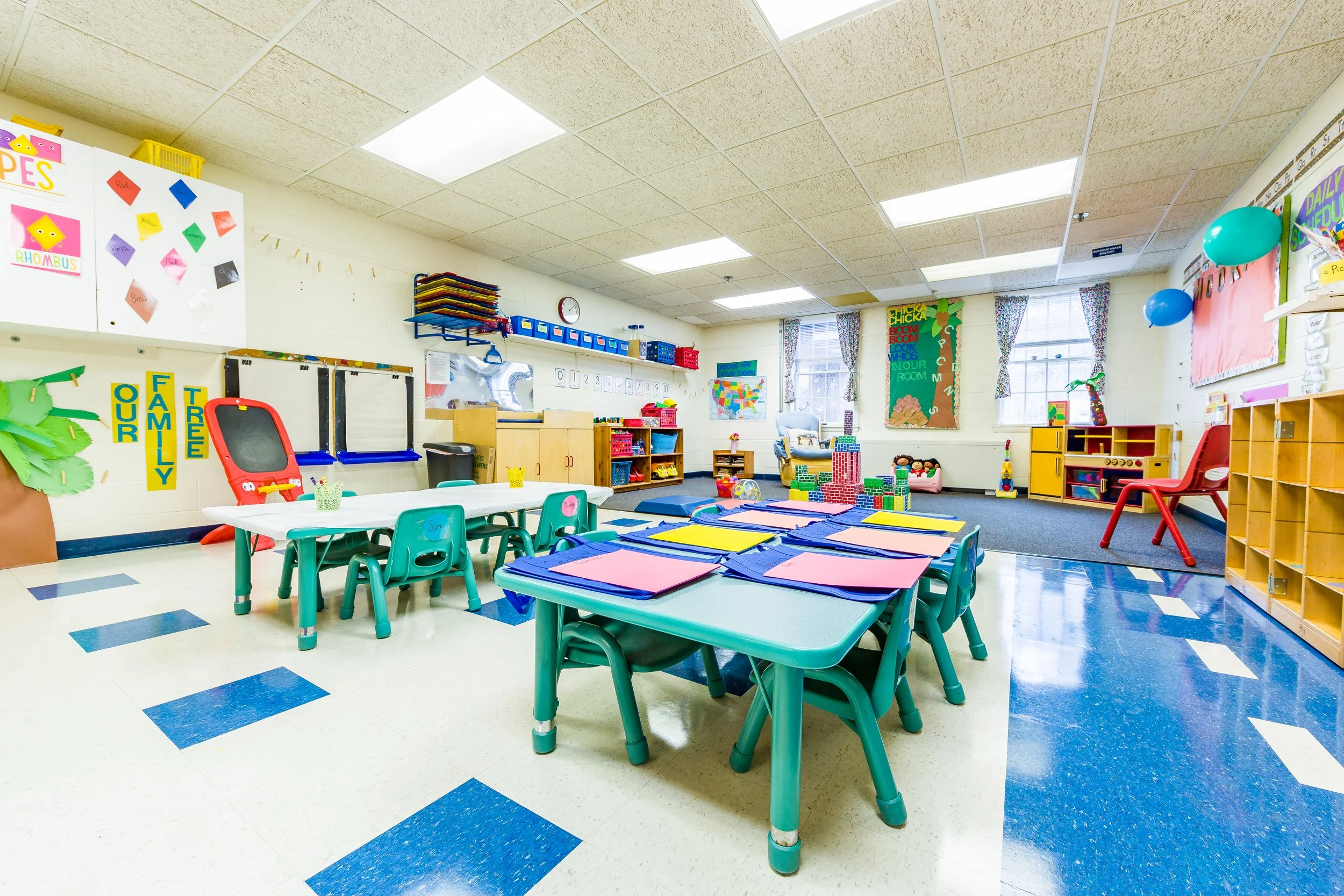
Ask a preschooler what they did at school and you'll usually get one word: "played." Some parents hear that and wonder when the learning starts. The honest answer is that the playing was the learning. At this age, play is the curriculum, and it's more rigorous than it looks.
Here's a quick translation guide to a morning in our classrooms.
The block corner is math class
Watch a four-year-old discover that two short blocks equal one long one. That's fractions, years before anyone writes them down. Building a tower that doesn't fall teaches balance, weight, and symmetry, and planning a castle before building it is engineering. When a teacher says "you used three rectangles and a cylinder," she's sneaking in geometry vocabulary while the architect is too busy to object.
The pretend kitchen is language school
Dramatic play is the richest language work in the building. Deciding who's the chef and who's the customer is negotiation. Taking an order takes listening and memory. "Let's say the pizza is ready now" is narrative structure, a beginning, middle, and end invented on the spot. And every time a wooden circle stands in for a pancake, your child practices the same mental move that reading requires: letting one thing stand for another.
The easel is pre-writing
Before a hand can write letters, it needs a hundred hours of scribbles, swoops, and circles. Painting builds the grip, the wrist strength, and the left-to-right sweep that handwriting borrows later. We celebrate the process instead of the product, which is why the purple scribble on your refrigerator matters. It's a workout log, not a portrait.
Playdough, puzzles, and beads build the hands
Small hands need strength training before they can manage scissors, buttons, and pencils. Rolling playdough snakes, threading beads, and trying a puzzle piece eleven ways before finding the twelfth build fine-motor skill and stubborn, glorious persistence at the same time.
The playground is executive-function class
Waiting for the slide is impulse control. Organizing a game of chase means agreeing on rules, then renegotiating them every forty seconds. Climbing something slightly scary is risk assessment. Children who get long, active outdoor play come back inside with more focus, not less. Recess isn't the reward for learning. It's part of how learning happens.
What you can do at home
You don't need flashcards, and honestly, we'd rather you skipped them. Instead:
- Narrate what you see: "You made the whole row blue."
- Ask "tell me about it" instead of "what is it?" One invites a story, the other invites panic.
- Resist fixing the tower. A tower that falls teaches more than a tower a grown-up rescued.
- Play alongside, and let them be the boss of the game sometimes. It's their office, and you're the intern.
Our whole philosophy is built on this developmental approach: joyful play, thoughtfully arranged, with teachers who know what each puddle of playdough is quietly teaching. So the next time the answer is "I played," take it as a full report card, and a good one.
All blog posts